


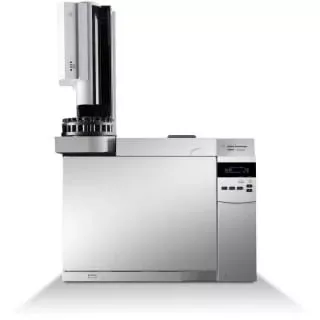
Gas Chromatography Agilent 7820A: The Gold Standard for Analytical Separation
Gas Chromatography Agilent 7820A (GC) is one of the most powerful and widely used techniques in analytical chemistry, offering unparalleled precision in separating and analyzing volatile compounds within complex mixtures. Its applications span numerous industries, from pharmaceuticals and environmental science to food safety and petrochemicals, making it an indispensable tool for researchers and quality control specialists alike.
What is Gas Chromatography?
Gas Chromatography is a technique used to separate and analyze compounds that can be vaporized without decomposition. In a GC system, a sample is injected into a heated chamber where it is vaporized and mixed with an inert carrier gas (often helium or nitrogen). This mixture is then carried through a long, thin capillary column coated with a stationary phase. As the sample travels through the column, the different components of the mixture interact with the stationary phase and are separated based on their volatility and affinity for the stationary phase.
Once separated, the individual components exit the column and are detected by a detector, which produces a chromatogram—a visual representation of the sample’s composition. The time it takes for each component to pass through the column, known as the retention time, is characteristic of each compound and allows for identification and quantification.
Key Features of Gas Chromatography
- High Sensitivity and Selectivity: GC provides excellent sensitivity and selectivity, allowing for the detection and quantification of trace amounts of compounds within complex mixtures.
- Rapid Analysis: Gas Chromatography is known for its speed, with many analyses taking only a few minutes to complete, making it ideal for high-throughput environments.
- Wide Range of Detectors: GC can be equipped with various detectors, such as Flame Ionization Detectors (FID), Thermal Conductivity Detectors (TCD), and Mass Spectrometers (MS), each offering unique advantages depending on the application.
- Versatility Across Applications: GC can analyze a broad range of volatile and semi-volatile organic compounds, making it suitable for diverse fields like environmental analysis, pharmaceuticals, forensics, and more.
- Quantitative and Qualitative Analysis: GC is capable of both identifying and quantifying the components of a mixture, providing comprehensive data in a single analysis.
- Automation and Data Integration: Modern GC systems are highly automated and integrate with sophisticated software for data acquisition, analysis, and reporting, streamlining the workflow.
Benefits of Using Gas Chromatography
- Precise Separation and Analysis: GC is renowned for its ability to precisely separate complex mixtures into individual components, providing detailed insights into the composition of a sample.
- Enhanced Quality Control: In industries like pharmaceuticals and food production, GC is essential for ensuring that products meet strict quality and safety standards by detecting impurities and verifying the composition of active ingredients.
- Environmental Monitoring: GC plays a crucial role in monitoring environmental pollutants, such as volatile organic compounds (VOCs), pesticides, and other hazardous substances, helping to protect public health and the environment.
- Forensic Analysis: GC is a cornerstone technique in forensic science, used for analyzing substances like drugs, explosives, and toxic compounds in criminal investigations.
- Research and Development: In research laboratories, GC is indispensable for developing new chemical compounds, studying reaction mechanisms, and exploring the properties of natural products.
- Cost-Effective: Despite its advanced capabilities, GC is relatively cost-effective, offering high performance with low operational costs, particularly when analyzing large numbers of samples.
Applications of Gas Chromatography
- Pharmaceutical Industry: In pharmaceuticals, GC is used to ensure the purity of active pharmaceutical ingredients (APIs), detect impurities, and validate the stability of drug formulations. It is also critical in the development of new drugs.
- Environmental Testing: GC is widely used to detect and quantify pollutants in air, water, and soil. It is particularly effective in analyzing VOCs, pesticides, herbicides, and other toxic substances, playing a vital role in environmental protection.
- Food and Beverage Industry: Gas Chromatography is employed to ensure food safety by detecting contaminants, such as pesticides and residual solvents, and verifying the authenticity and quality of food products, including flavors and fragrances.
- Petrochemical Industry: GC is essential in the petrochemical industry for analyzing the composition of crude oil, natural gas, and refined products. It helps in quality control, process optimization, and compliance with regulatory standards.
- Forensic Science: Forensic laboratories use GC to analyze drugs, explosives, and other trace evidence, providing critical data that can be used in criminal investigations and court proceedings.
- Biotechnology and Research: GC is a valuable tool in biotechnology and research laboratories for studying biomolecules, natural products, and chemical reactions, contributing to advances in science and medicine.
How to Choose the Right GC System
When selecting a Gas Chromatography system, it’s essential to consider your specific application needs. Key factors include the type of samples you will be analyzing, the required sensitivity and detection limits, and the need for specific detectors. If your analysis involves complex mixtures or trace-level detection, a system with a mass spectrometer (GC-MS) might be necessary.
Additionally, consider the automation capabilities of the GC system, particularly if you require high-throughput analysis. Ease of use, software integration, and the availability of technical support are also crucial factors to ensure efficient operation and accurate data analysis.
For laboratories that handle a variety of samples, a versatile system with multiple detectors and customizable columns will offer the flexibility needed to accommodate different types of analyses.
Conclusion
The Gas Chromatography (GC) system is a powerful and versatile tool that has become the gold standard for the separation and analysis of volatile compounds. Whether you are working in pharmaceuticals, environmental science, food safety, or any other field that requires precise chemical analysis, GC provides the accuracy, speed, and reliability needed to achieve your goals.
With its broad range of applications, high sensitivity, and ability to handle complex mixtures, GC is indispensable for quality control, research, and regulatory compliance. Explore our range of Gas Chromatography systems to find the perfect solution for your analytical needs, and elevate your laboratory’s capabilities to new heights.
Reviews
There are no reviews yet.